Weekend Sale20% off orders over US$60Ends in 3h 49m 50s
Weekend Sale20% off orders over US$60Ends in 3h 49m 50s
Your cart is empty.
In Stock
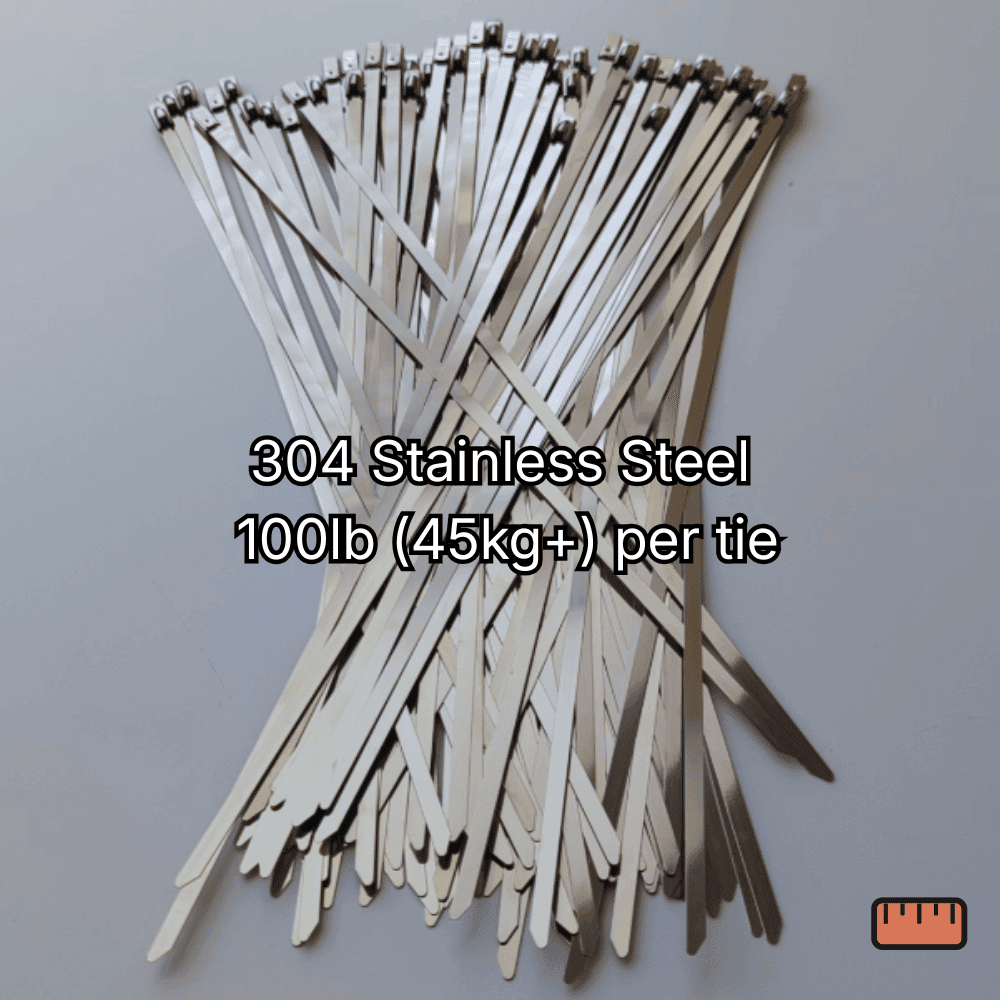
Plastic quits at 185°F (85°C). Ours are rated to 1,000°F (538°C).
 |  | |
|---|---|---|
| Max working temperature | 1,000°F(538°C) | ~185°F(85°C) |
| Hold per tie | 100+ lb(45kg) | 20-50 lb(9-23kg) |
| UV and rust resistant | ||
| Outdoor lifespan | 20+ years | Months |
Max working temperature
Hold per tie
UV and rust resistant
Outdoor lifespan
Plastic is cheap for a reason. In the sun it goes brittle and cracks. Near heat it softens and lets go. Under load it stretches and snaps - and you end up doing the same job twice.
In the sun, ordinary ties go brittle and crack. Near heat, they soften and let go. Under real load, they stretch and snap - and you end up doing the same job twice.
Plastic ties cost less to buy. But when they crack, melt, or snap, you're buying more ties and redoing the job. Stainless costs more upfront, then nothing again.
Built for the jobs plastic fails at:
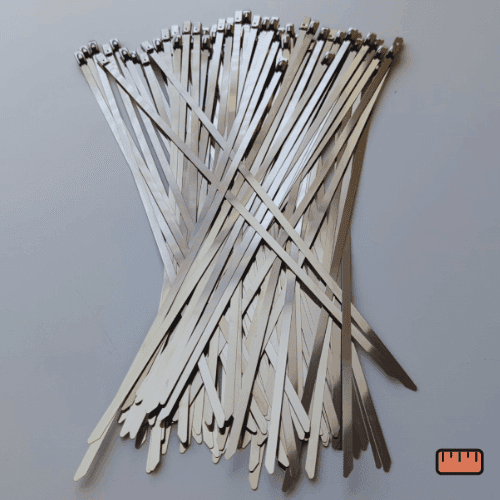
One tie. 50kg. Rated to 100+ lb (45kg). Stress test - allow three times your load for anything that moves.
The ball-lock only moves one way. Once it's tight, it stays tight.
“Got the 600-pack for a large fence repair job and it was the best per-tie price by far. Consistent quality throughout the box, no weak or bent ones like you sometimes get with cheaper brands.”
Most people wish they'd bought the tool.
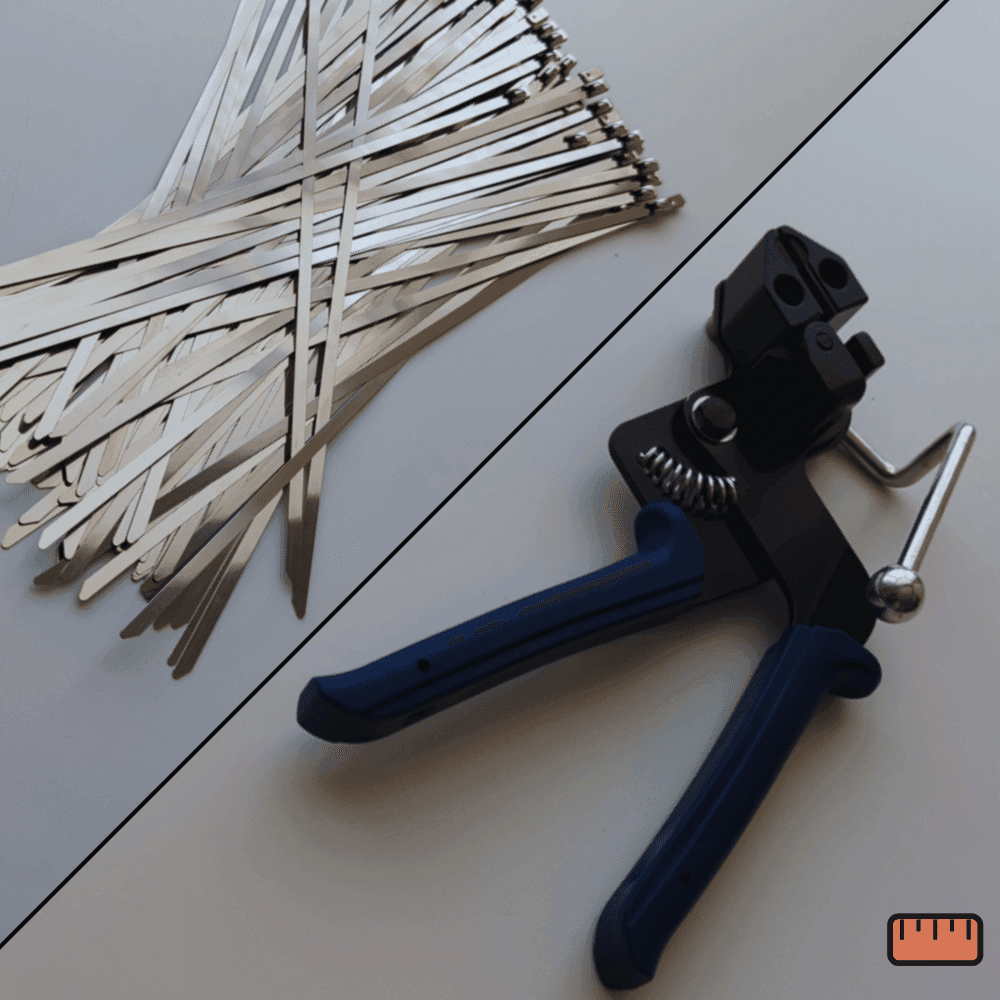
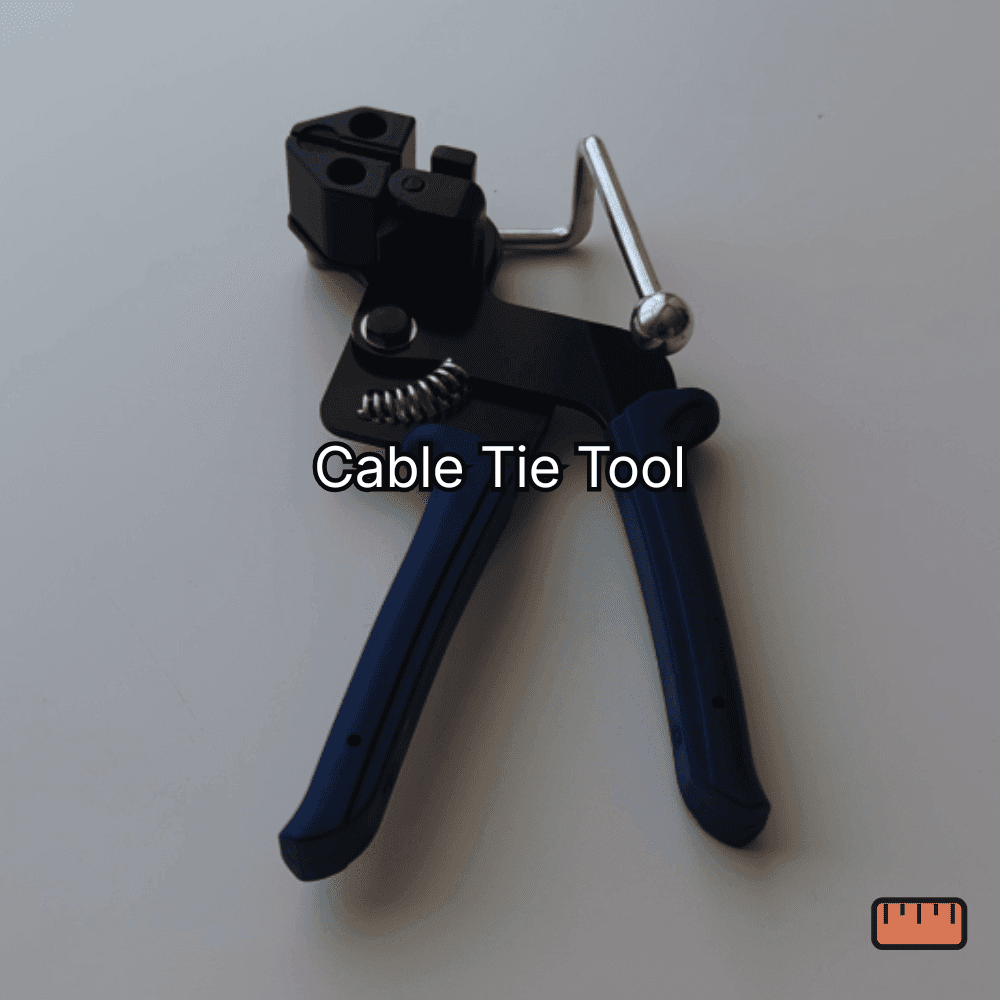
Pliers won't get these properly tight. The tool grips the loose end, pulls it to the same tension every time, and flush-cuts it without letting that tension go.
Doing five ties? Pliers will get you there. Doing a fence, a loom, or anything you need your other hand for - add the tensioning tool above.
“Ties themselves are solid, properly heavy-duty. Fitting them tight by hand with pliers is a bit of a workout though - ended up ordering the tensioning tool separately and it made the job much faster. Docking one star only because I wish that was made clearer up front.”
Squeeze to draw the wrap tight through the ball-lock, then push the cutter lever - the tool holds that tension while it trims the end level with the head.
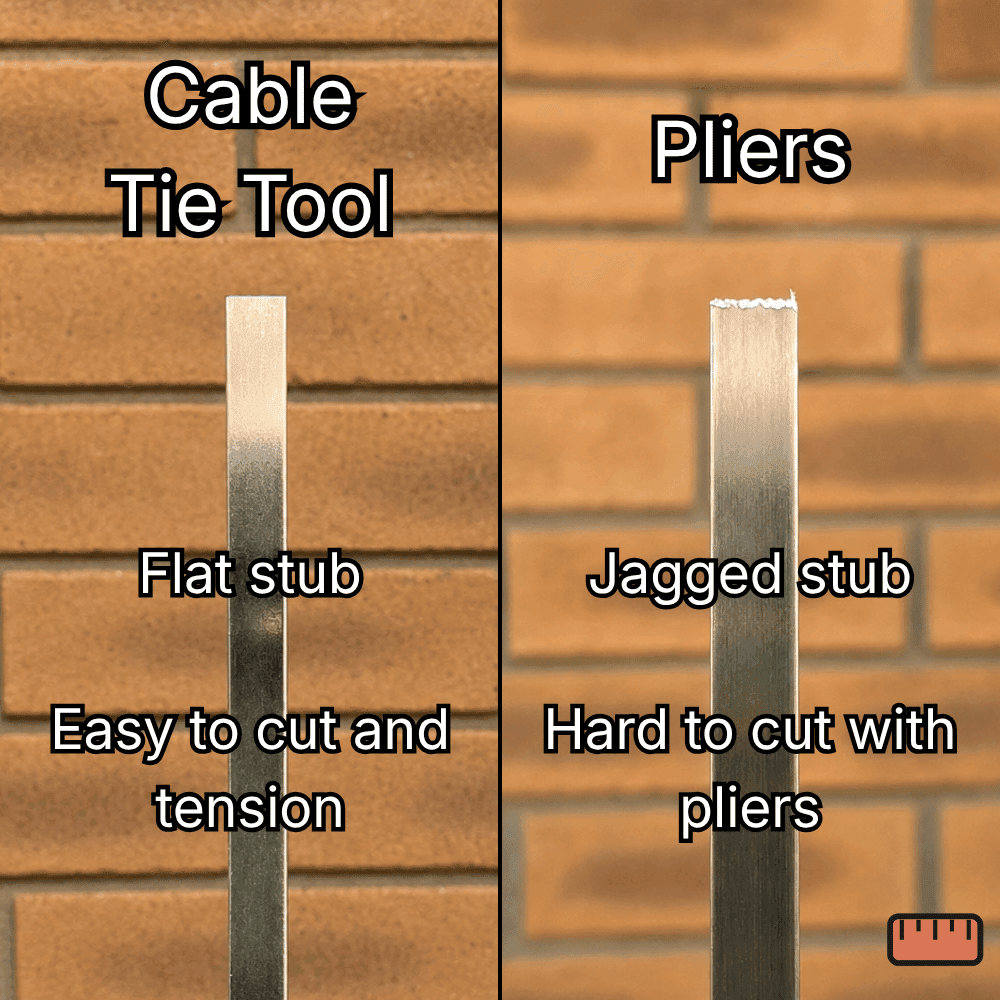
It's cut steel either way, so no edge is polished smooth. The difference is a tighter wrap with nothing sticking out of it.
Fitting by hand? Trim as close as you can and bend any remaining nub inward. For a tight wrap and a flush cut every time, add the tensioning tool above.
Fit it once.
Put them on your job. If they're not right, send them back within 30 days and get your money back.
Got the 600-pack for a large fence repair job and it was the best per-tie price by far. Consistent quality throughout the box, no weak or bent ones like you sometimes get with cheaper brands.
Used these to secure heat wrap on my exhaust and headers - plastic ties I'd tried before just melted. These haven't budged after months of heat cycling. Self-locking head tensions up tight and stays put under vibration.
Used the 300-pack around the garden fence and some trellis work. It's been through a full winter outside and there's no rust or discolouration at all. Much sturdier than the plastic ties I was replacing.
Ties themselves are solid, properly heavy-duty. Fitting them tight by hand with pliers is a bit of a workout though - ended up ordering the tensioning tool separately and it made the job much faster. Docking one star only because I wish that was made clearer up front.
Do the job and feel tough enough, but I mainly needed shorter ties for small cable bundles and had to trim a lot of excess. Would be great if a shorter length option was offered alongside the longer sizes.